
Short answers for big questions
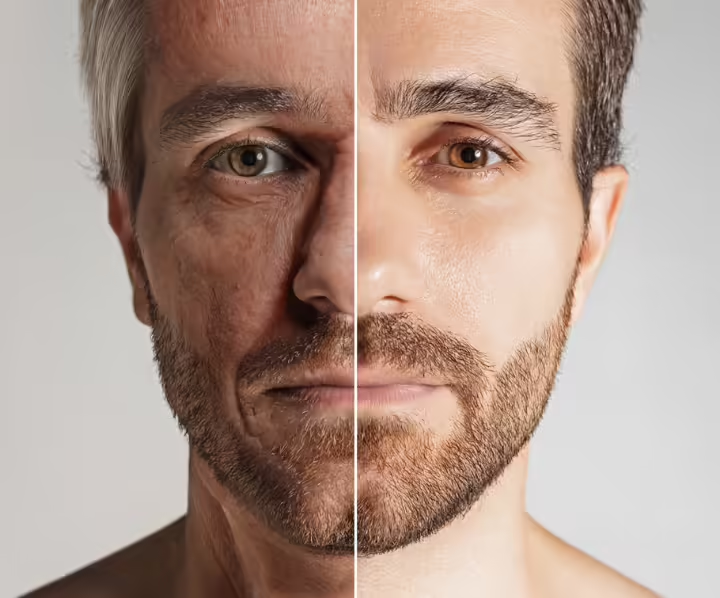
You meet a woman at a party, and you think she is 35. You later find out she is 15 years older. Intriguing, isn’t it?
Or you bump into a former classmate, and you hardly recognise him because he has aged so brutally. Very unsettling…
Yes, there is something disturbing about ageing – especially when people transition to so-called “middle-age”. While we usually recognise babies and young teenagers as such, guessing the age of anyone older becomes challenging as we age ourselves.
So, how come “ID-age” is so unreliable? Could it be that people age at different rates and/or in different ways?
Illustration: master1305 / iStock
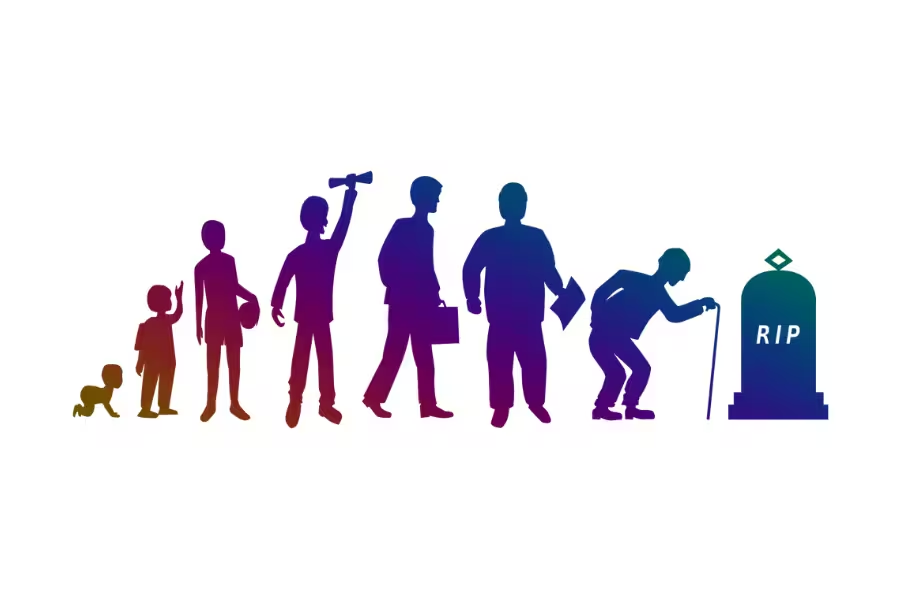
While thereis still no definitive and consensual definition of ageing, most specialists would agree that it is a complex process steered by various factors – many of which remain to be discovered.
However, a rough distinction can be seemingly drawn between two central intertwining mechanisms.
On the one hand, the body seems to suffer damage on different biological levels during its lifespan. And, at some point, the damage can no longer be repaired.
On the other, ageing appears to be governed by overarching rhythms and to be clearly limited by the (until now) insurmountable boundary of human life. The so-called Hayflick limit, posits a clear restriction of potential cell divisions – perhaps pointing to a form of more programmed mortality.
Illustration: OpenClipart-Vectors / pixabay & epiAge

Sounds like a straightforward question, right?
Indeed, a hard stare in the mirror in your forties may already deliver a few hints: a wrinkle here, a bulge there… from saggy skin to thinning or greying hair, there are many outward signs that point to ageing.
But as you ease into your fifties or sixties, you may start perceiving inner signals: stiff knees, high blood pressure or stabbing back pain let you unmistakenly know that you have passed your physiological prime. And in your seventies or eighties, you may slowly become forgetful… A most unwelcome cognitive telltale!
Unfortunately, there is far more to ageing than meets the eye or indeed personal functioning or perception. Indeed, the above-mentioned signs and dis-eases are what could be called “macro-symptoms of ageing”.
Illustration: Gerd Altman / pixabay / epiAge

Over the past decade, it is molecular biologists who have been making the most progress in deciphering the underlying micro-mechanics of ageing. The authors of a seminal paper (López-Otín & al., 2013) highlighted 9 so-called “hallmarks of ageing”. But a decade later, they were updated to 12 (López-Otín & al., 2023) to accommodate new research.
According to the authors, the common denominator of these deep transformations is:
1. their age-associated manifestation,
2. the acceleration of aging by experimentally accentuating them,
3. the opportunity to decelerate, stop, or reverse aging by therapeutic interventions on them.
Although these hallmarks can and usually do co-occur, they tend to evolve sequentially and from micro- to macro- or systemic damage. The primary hallmarks are located at the molecular level and seem to cause the initial damage. As the body reacts to this damage, the antagonistic hallmarks arise. Finally, the integrative hallmarks are signs that the body is increasingly (and systemically) overwhelmed.
Illustration: Jordan Garner / pixabay
PRIMARY HALLMARKS (causes of damage)
1. Genome instability: increased error-causing changes, mutations and rearrangements in the DNA
2. Telomere attrition: shrinking of protective chromosomal caps
3. Epigenetic alterations: changesin the biochemical switches around the DNA
4. Loss of proteostasis: changes in the body’s protein management
5. Disabled macroautophagy: malfunction of cellular waste disposal system
ANTAGONISTIC HALLMARKS (responses to damage)
6. Deregulated nutrient sensing: body fails to detect and respond adequately to nutrients
7. Mitochondrial dysfunction: the cell “energy plants” are less productive and generate more waste
8. Cellular senescence: cells stop dividing but don’t die, thus causing inflammation
INTEGRATIVE HALLMARKS (effects of uncontainable damage)
9. Stem cell exhaustion: when these key-cells fail to regenerate, tissues and organs fail to repair properly
10. Altered intercellular communication: signalling pathways change, leading to abnormalities
11. Chronic inflammation (“inflammaging”): chronic, low grade, systemic inflammation
12. Dysbiosis: imbalance of microorganism communities in the gut
Your body is not a machine; it has its own rhythms. And children are a good illustration of this: their development alternates between phases of intense growth and more quiet assimilation phases.
Similarly, ageing is not governed by constant, linear change. It is fundamentally dynamic across the lifespan. It can accelerate, plateau and, yes, sometimes even decelerate.
While some processes appear more linear such as telomere shortening or stem cell exhaustion, others are not. In fact, there is increasing new evidence that so-called “non-linearities” may be more the rule than the exception.
Epigenetic research has long shown that individual organs age at different rates but new epigenetic and metabolomic findings also point to forms of seasonal ageing. For instance, a small recent study in Nature Aging (Shen & al., 2024) was able to pinpoint two major turning points in human ageing, featuring marked accelerations around the ages of 44 and 60. The 44-year-old transition was characterised by changes in cardiovascular function, lipid and alcohol metabolism, whereas shifts in immune regulation, carbohydrate metabolism and kidney function were typical of the 60-year-old landmark.
Interestingly, the researchers found that most molecules (81.0%) investigated exhibited non-linear patterns. This seems to indicate that converging surges rather than slow and regular rhythms characterise the multi-pathway progression of ageing.
Illustration: download-a-pic-donate-a-buck / pexels
When it comes to this question, the battle is still raging on… and it may never be quite settled – perhaps because it is more a question of perspective or policy!
Until recently, ageing was unequivocally classed as a natural process that could perhaps be slightly delayed but was ultimately unavoidable. It was also perceived as a gateway to disease: a weakened damaged body was seen as prone to develop illnesses typical of ageing, such as coronary heart disease, type-2 diabetes or dementia.
However, the hallmarks of ageing framework points to the fact that many of these processes can be slowed down and even reversed. In fact, it is one of molecular biology’s biggest challenge to find or re-purpose therapeutic interventions to treat ageing.
From a public health policy perspective, treating ageing in its early stages as a “macro-disease” may help alleviate the personal, social and economic burden of the illnesses it triggers.
Hence, a more conciliatory approach that most researchers, health practitioners and policymakers can agree upon is the concept of prolonging “healthspan” rather than just lifespan. The idea here is that, irrespective of whether ageing itself is inevitable or a surmountable disease, efforts should concentrate on making old age less debilitating and expensive through preventive strategies – be they medical or lifestyle-oriented.
Illustration: rawpixel / iStock

If disease can be prevented or mitigated, then maybe ageing too? Indeed, preventive and functional medicine regularly demonstrate that health is not a static one-way phenomenon. Yes, it tends to worsen with age or under certain circumstances, but it can also be measurably improved through a range of interventions.
But first, we need to discuss what actually influences health and biological ageing.
While genetics, i.e. the inherited predisposition for specific weaknesses and diseases, was long thought to determine (healthy) longevity potential, we now know that it may only account for ~20% of it.
Much more significant is the influence of lifestyle: i.e. what and how much you eat, move and sleep, how you manage your stress and, last but certainly not least, how you enjoy life!
However, your environment – in the broadest of senses – is also crucial, even if it is still challenging to identify and quantify its exac tinfluence. Recent studies point to the tangible effects of, e.g. poverty, discrimination and (intergenerational) trauma, on biological ageing. But more research needs to focus on the holistic repercussions of geophysical, biochemical, political, historical, infrastructural, economic, social and psychological factors on health and ageing.
Illustration: Gustavo Fring / pexels

Yes, you can! And you actively but often unconsciously do so through all your life choices.
So, you may not be able to control your genes or completely master your environment but since your DNA is not your destiny, you are lef twith a huge asset: managing your lifestyle. And this is a vast area you are free to tweak – even without huge resources.
Countless studies as well as our customers’ practical experiments show that even relatively modest positive changes such as e.g., cutting out junk food from your diet and taking up a new fitness routine, can already have a significant impact on your longevity and your healthspan.
While it certainly pays to comprehensively review and, if needs be, modify your lifestyle habits, experience shows that small consistent steps are usually more sustainable than a hardcore revolution.
Indeed, as you begin to witness the positive effects stemming from your initial changes, it will encourage you to tackle further aspects.But before you are tempted to micromanage every aspect of your lifestyle, remember to take a deep breath and occasionally break the rules. Any octogenarian (and beyond) will attest to the power of occasionally enjoying a delightful exception!
Illustration: Dean Drobot / canva

So, what’s the best, quickest and easiest way to influenceyour biological age?
Now be honest: weren’t you ever tempted to click on the ad that reeled you in with promises of instant hair regrowth, weight loss, wrinkle smoothing, pain relief, or – even better – with a magic rejuvenation panacea?
Sorry to disappoint, but the fountain of youth is empty …
Actually, chances are that even if a 1-pill longevity formula were discovered, it might not work for everyone. Why? Because our biologies are unique.
Instead, healthy longevity management is the way to go, but it is a complex puzzle – with no quick fixes. Its pieces are deceptively simple, but they must be fully appropriated and individually adjusted. And they are anything but new or secret – your great-grandmother was already aware of them!
Indeed, the four basic longevity pillars we all need to cultivate are appropriate nutrition, movement, sleep and stress management. Another two, supplementation and therapies, can be considered as optional, needs-based and often temporary.
But is it possible to define these pillars a bit more prescriptively? We think it is! Check our attempt to distil a basic, open-to-all longevity formula – without dumbing down the need for personal or cultural adjustments.
Illustration: HOerwin56 / pixabay
NUTRITION
Go for a balanced diet containing a variety of fresh, natural and mostly unprocessed foods that provide plenty of protein, healthy fats and carbs, fibre and micro-nutrients. Also include naturally fermented foods while avoiding alcohol, industrial sugars, oils and flours as well as all manner of additives. Until now, it is the so-called Mediterranean diet (and local variations thereof) that has been the most studied and seems to best match these criteria. But there are healthy and long-living people everywhere and they thrive on very different diets. Hence studies are ongoing and may reveal new insights…
MOVEMENT
As the saying goes “sitting is the new smoking”! Indeed, your body was designed to move, so move every day, and throughout the day. Play with variety, intensity, load and even temperature (think cold water swimming or sauna breaks), but according to your age as well as your level of health and fitness to avoid injury. Check with your physician and enrol a fitness professional if you are uncertain what routines or modalities are appropriate for you. Try new things and keep it fun to fuel motivation and consistency –whether you exercise alone or with a group.
SLEEP
Determine your circadian rhythm and try to organise your daily schedule accordingly. Make sure you get as much sun-/daylight as possible/reasonable when you start your day, while avoiding exposure to (especially artificial) light before going to bed. If you enjoy napping, time your naps carefully to not jeopardise a good night's sleep. Try to truly unwind at least an hour before bedtime. And go to bed at a regular time in a cool and dark room. Seek medical help when plagued with insomnia.
STRESS MANAGEMENT
Stress in the (post-)industrial world is difficult to avoid because technology-fuelled rhythms are rarely in synch with human biology and emotional needs. Juggling work, commuting, household chores and maybe even childcare is overwhelming for most of us. So, taking breaks, recharging in nature, having fun with friends and family, pursuing creative activities and making time for a mindfulness practice should become non-negotiables to preserve your mental and overall health.
SUPPLEMENTATION
Our bodies are not all created equal, we originate from and live in different places, and our health histories are individual. This means that we may (occasionally) require an additional physiological or metabolic boost in the shape of a supplement if our biology is struggling or our environment is not supportive enough. While e.g., iodine or vitamin D3 supplements may be no-brainers in some parts of the world, it usually pays to find out what our individual needs are through testing before ingesting anything new.
THERAPIES
Just as our health histories are highly personal, so are our emotional biographies. Unfortunately, both can take a huge toll on our longevity. And it often takes more than a pill to overcome existential challenges, be they accidents, diseases or trauma. So, additional therapies – whether physical, psychological or holistic – may be the way to go for you, for a time at least. Blanket recommendations would be amiss here, so please seek specialist advice.

Making changes is good but you have to keep track of what really works!
Indeed, whether you are driving a car or piloting a helicopter, you need real-time feedback on the “bowels” of your machine to ensure you get to your destination unscathed. But what about the human body – arguably one of the most complex flesh “vehicles” to have ever colonised this planet?
Until recently, there were no windows or dials to monitor the inner mechanics of our constantly evolving and self-regulating biology. Beyond the often-unclear inputs filtered through our senses, most of us had to rely on medical examination, imaging technologies and lab testing to get an overview of our health.
Nowadays, however, we are confronted with a glut of methods and biomarkers to assess our health or determine our biological age.
The problem, however, is that most of them tend to offer us a small or partial window onto our overall health and longevity. So, as true longevity buffs, we may be tempted to monitor as many variables as possible with the help of wearables and/or countless tests. But even if we are health professionals, we may still struggle with joining the dots to get the bigger picture.
So, this is where epigenetics and biological age determination come to the rescue.
Illustration: Zoli / pixabay

Let’s start with the depressing bit: there is virtually nothing you can do about the genes you inherited from your parents. They have slowly evolved over centuries, and you are pretty much stuck with them. They determine a lot of your body’s hardware: the shape of your face, the colour of your eyes, your knock knees or your flat feet… They also outline potential “problem areas”, like a heightened sensitivity to glucose or a predisposition for Alzheimer’s.
But now for the good news: many of your genes lie dormant and will probably continue to do so unless… your environment and your lifestyle awaken them through active programming.
How does that happen? Through epigenetics. Epigenetics is the software or system of biochemical switches around your DNA that can express (i.e. activate) or silence genes – through e.g., methylation, histone modification or microRNAs.
When you take steps to improve your lifestyle and/or modify your circumstances and your environment, you positively steer or programme your epigenetics to express health-enhancing genes while muting potentially harmful ones. In that, you are similar to a gamer: you may not be able to choose the basic parameters of the video game you are currently playing but you can certainly choose how you play it!
Illustration: VAZHNIK / pexels

The epiAge test is an epigenetic test (or clock) designed to monitor your biological age.
We do not analyse your DNA (hardware) but one of the biochemical switch systems (software) around your DNA – in our case methylation.
In contrast with other models (such as Horvath’s clock and its offshoots) that focus on hundreds of so-called CpGs sites (specific regions around your DNA), our test focuses on just 13 CpGs that strongly correlate with chronological age. And we use triple-sequencing with NGS (Next Generation Sequencing) instead of BeadChip arrays. This means that three independent tests are conducted with each saliva sample, analysing up to 20,000 cells in the process. The average values obtained through this lean yet intense testing are then processed via a complex algorithm to obtain your biological age.
This streamlined design means that epiAge provides more robust and reliable age estimates than array-based methods, which are often plagued with technical noise, especially when it comes to replication.
For you, this means that epiAge is the ultimately reliable and no-frills option to monitor the evolution of your biological age.
Illustration: epiAge
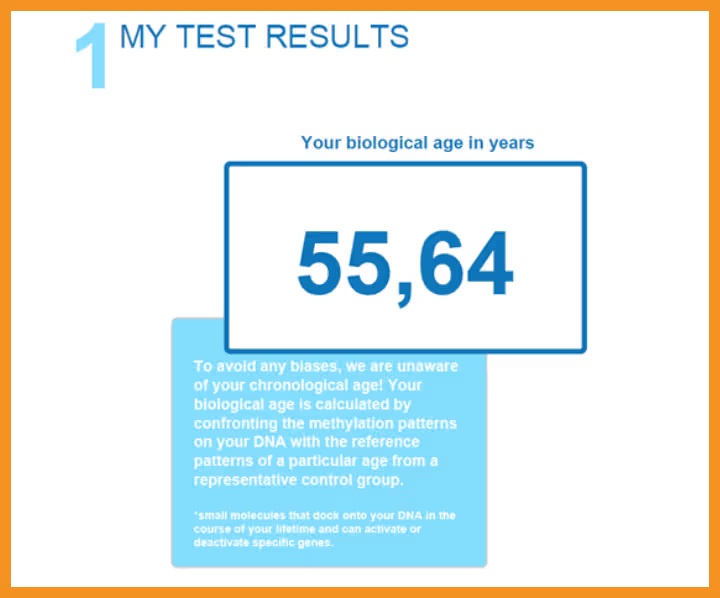
When you get your epiAge test result, you won’t need AI or a specialised physician to interpret a long list of complex parameters. Indeed, at epiAge, our mission is to keep things clear and simple for all users: your result is a number – your biological age.
At a glance, you get a snapshot of the state of your body’s health, hence how it has aged as compared to people in your chronological age cohort.
Naturally, within your cohort, some will age faster than others. Which is why your biological age is considered within the norm when it is ± 5 years from your chronological age.
The technical accuracy of your test refers to the triple sequencing process: to ensure analytical consistency, we perform three separate tests on your saliva sample. A technical accuracy of almost 100 % means that the results of the individual test cycles were highly consistent.
Illustration: epiAge

So, you’ve just found out that your biological age is 10 years younger than the chronological one?
Congratulations! You may of course be endowed with “good genes”, but it is even more likely that you are generally healthy and that both your environment and your lifestyle are longevity conducive. So, why not use this amazing incentive to lose a few more years?
Ouch: is your biological age 10 years higher than your chronological age?
Well, it’s not the end of the world, but it may be a much-needed wake-up call to take stock of your lifestyle. Does your diet tend to incorporate more junk food than fresh whole foods? Is your daily movement budget confined to the radius between the coffee machine, your laptop and the couch? Are 5 hours of fitful sleep the norm for you? Has stress become your middle name over the past months or even years?
Now is the time to enrol that shock effect and shake yourself out of complacency to make real change – but not overnight and not everything at once though.
First, target 2-3 realistic measures and stick to them. For instance, stop using lifts or swap your car against a bike, eat a healthy meal at least 4 times a week and read a soothing book before going to bed at 11 pm instead of doom-scrolling until 2 am. The increased energy and focus gained will then encourage you to confront other bad habits!
Illustration: RapidEye / Getty images / canva & Khosro / canva
You’ve just been sucker-punched: 18 years older (or younger) than your chronological age. How can that be…? Perhaps you have terminal cancer, or maybe your sample has been swapped? Unless the test is rubbish? No. Now is the time to take a deep breath. This type of discrepancy is thankfully not the norm at epiAge, but it does occasionally happen. Our “usual suspects” are hefty viral infections such as (asymptomatic) Covid-19 or influenza. They can trigger systemic inflammation that the body finds hard to contain. This can manifest as (massive) biological age acceleration, but in rare cases also deceleration. If you have been sick or think it is a possibility, we would advise you to wait 2-3 months before re-taking the test. As a rule, your age will have returned to baseline by then. However, if you can rule out this type of illness, it may be time to consult with your GP or a longevity specialist. S/he can suggest further tests to assess your overall health and help you to screen your lifestyle or your environment for potential troublemakers. And if you don’t know who to turn to, the expert physicians and longevity clinics from our international network will be happy to support you!
Illustration: Parveender Lamba / pixabay


